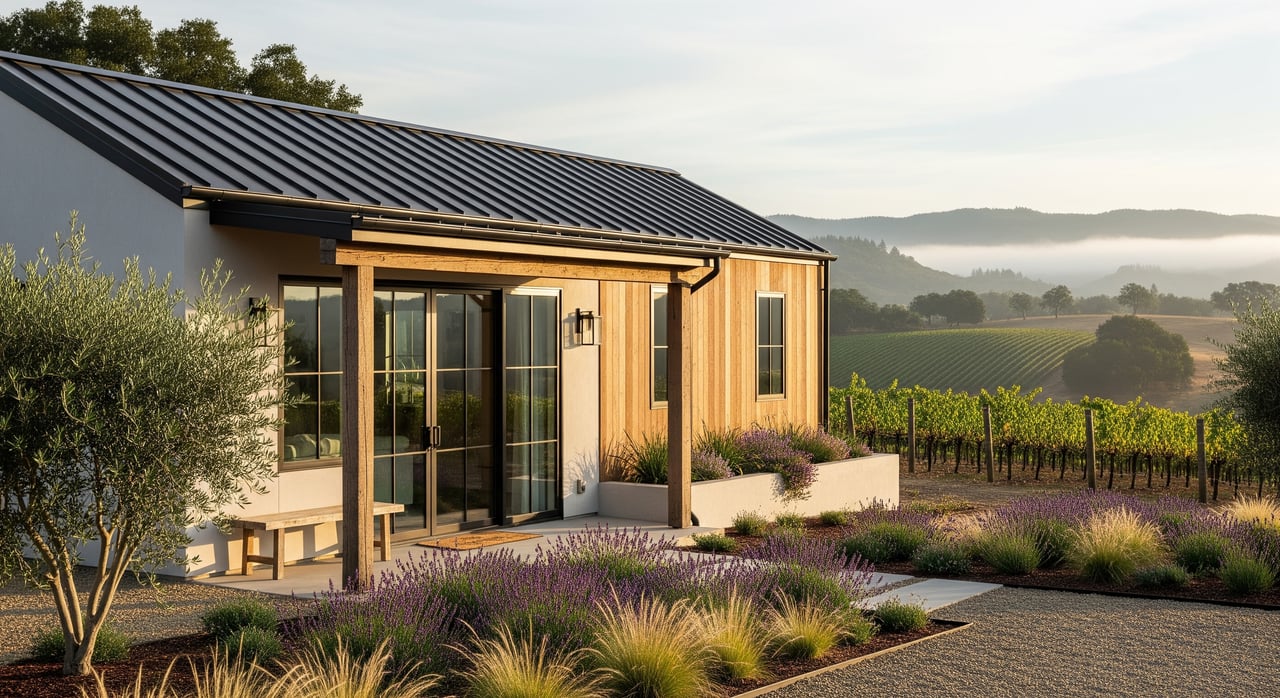
Thinking about adding a backyard cottage or rental suite to your Napa property? An accessory dwelling unit can unlock flexible space for family, generate rental income, and boost long-term value. The rules and costs can feel complex, especially with fire, septic, and energy standards in play. This guide walks you through Napa-specific checkpoints, realistic budgets, and the permitting path, with links to official resources so you can plan with confidence. Let’s dive in.
ADU basics in Napa
An accessory dwelling unit is a self-contained home on the same lot as your primary residence. You’ll see three common formats in Napa:
- Detached ADU: a small standalone home in the yard.
- Attached ADU: an addition that links to the main house.
- Conversion ADU or JADU: a garage or interior space converted to living space. Junior ADUs are often capped at about 500 square feet under state policy; confirm local rules.
California state law sets the baseline for what cities and counties must allow. The City of Napa and Napa County apply objective standards like setbacks, height, and design, consistent with state law. You can review statewide guidance through the California Department of Housing and Community Development and verify local requirements with the City of Napa Planning and Building divisions or County of Napa for properties outside city limits.
Confirm your jurisdiction and zoning
Start by confirming if your address is inside the City of Napa or in unincorporated Napa County. The rules, fees, and permit center differ. Contact the City of Napa or the County of Napa to verify your jurisdiction and which pages to use.
Most residential zones allow ADUs, but overlays and special districts can affect approvals. Ask planning staff which ADU types are allowed on your parcel, the maximum sizes, and any design standards that apply.
Utilities, septic, and fire safety
Utility capacity often shapes feasibility and cost. If you are on septic, you must confirm system capacity with Napa County Environmental Health. Adding a unit can trigger a septic upgrade or require sewer connection if available. Water service capacity and meter sizing can also affect plans.
Napa is wildfire-prone, so expect fire agencies to require defensible space and fire-focused construction features. Start early with your local fire authority and review guidance from Cal Fire on access, vegetation clearance, and fire-hardening.
ADU size, height, and setbacks
Exact numbers vary by jurisdiction and lot context, so verify the details with planning staff. In many California cities, detached ADUs commonly range from about 600 to 1,200 square feet, and JADUs are often limited to 500 square feet. Setbacks and height limits depend on the ADU type and location on the lot, and some cities offer reduced setbacks for conversion projects or smaller detached units. Ask how ADUs are treated for lot coverage and floor area ratio.
For state-level context on what must be allowed, review California HCD’s ADU guidance, then confirm the City of Napa’s or County’s current standards before you design.
Parking, owner-occupancy, and rentals
State reforms have limited when cities can require new parking for ADUs, especially near transit and in specific circumstances. Always check the local interpretation of parking rules for your address.
Owner-occupancy rules for ADUs have changed over time. Ask whether the City of Napa or Napa County requires owner-occupancy for new ADUs, JADUs, or both.
Short-term rentals are tightly regulated in Wine Country. Some jurisdictions restrict or require permits for ADUs used as short-term rentals. Confirm the current policy and registration needs with the City of Napa or the County of Napa before you plan for vacation rental income.
Permits and approvals: step by step
You can streamline your project by following a clear process and engaging the right professionals.
-
Confirm jurisdiction and zoning. Verify City vs County, allowed ADU types, size limits, and any overlays.
-
Run feasibility checks. Determine sewer vs septic, water capacity, and any fire access or defensible space constraints. Identify slopes, trees, easements, and utility routes.
-
Meet with Planning and Building. A pre-application conversation helps you avoid surprises and clarify submittal requirements, fees, and timelines.
-
Hire your team. Many projects need an architect or designer, a licensed general contractor, and engineers for structure, grading, or septic as required.
-
Prepare and submit plans. Include site plan, floor plans, elevations, structural calculations, energy compliance documentation, and application forms. Ask about ministerial review and current plan check timelines.
-
Respond to comments and pay fees. Make any plan revisions requested by plan check. Coordinate with utility districts on meter upgrades and connections.
-
Build and inspect. Construction typically includes foundation, framing, rough utilities, insulation and energy compliance, finishes, and final inspections.
-
Final sign-off and occupancy. Complete utility hookups and receive the certificate of occupancy.
For general state policy and process insights, consult California HCD. For energy code requirements, see the California Energy Commission’s Title 24 resources.
How long it takes in Napa
Timelines vary by scope and review workload, but these ranges are typical locally:
- Pre-design and feasibility: 2 to 6 weeks.
- Design and construction drawings: 4 to 12-plus weeks.
- Plan check and permit approval: often 1 to 3 months for ministerial ADUs, longer for complex sites.
- Construction: 3 to 9 months for conversions and smaller builds, longer with grading or custom finishes.
Starting utility and fire conversations early helps keep you on schedule.
What an ADU costs in Napa
Actual budgets depend on size, finishes, site conditions, and fire or septic requirements. Napa and greater Bay Area ranges commonly look like this:
- Garage conversion: approximately 40,000 to 150,000 dollars.
- Attached ADU: approximately 150,000 to 350,000 dollars.
- Detached ADU: approximately 200,000 to 500,000-plus dollars.
- Complex or luxury builds with grading or custom work can reach 600,000 dollars or more.
Plan for both hard and soft costs:
- Hard construction: about 55 to 70 percent of total.
- Soft costs: 10 to 20 percent for architect, engineering, energy reports, permits, and plan check.
- Utilities: 5,000 to 50,000-plus dollars for sewer, water, and electrical upgrades.
- Site work: 10,000 to 100,000-plus dollars when grading, retaining walls, or drainage are needed.
- Fire-hardening and exterior upgrades: several thousand to tens of thousands, depending on requirements.
- Landscaping and hardscape: 5,000 to 30,000-plus dollars.
- Contingency: set aside 10 to 20 percent to manage surprises.
Permit and impact fees vary by jurisdiction. Expect building permits and plan check in the low thousands to over 10,000 dollars depending on valuation and scope. Some cities reduce impact fees for smaller ADUs. Confirm fee schedules with the City of Napa or County of Napa, and ask utility districts about connection charges and meter costs.
Wildfire, energy, and air quality requirements
Fire safety is not just smart in Napa, it is often required. Work with your design team to incorporate defensible space and wildfire-resistant materials. Review best practices and requirements with Cal Fire and your local fire authority early in design.
All ADUs must comply with California Building Code and the state’s energy standards. Title 24 affects insulation, HVAC, lighting, and sometimes solar-related features. Get familiar with the California Energy Commission’s Title 24 guidance and plan for energy documentation in your submittal.
If you are considering solid-fuel appliances, confirm local air rules. The Bay Area Air Quality Management District sets regulations on wood-burning appliances and seasonal restrictions that can affect design choices.
Financing options to explore
Homeowners in Napa typically fund ADUs with one or a mix of these options:
- Cash or savings
- Home equity line of credit or home equity loan
- Cash-out refinance
- Construction-to-permanent loan
- Renovation or rehab loans, subject to lender rules
- Private loans or partnerships
- Grants or incentives when available
Programs and guidance evolve, so it helps to check current statewide information through California HCD and then speak with local lenders about ADU-friendly products and underwriting.
Design choices that add value
A few early design moves can improve livability and long-term value:
- Plan for accessibility. Consider a zero-step entry, wider doors, lever handles, and a ground-floor bedroom and bath if the ADU will serve older adults.
- Right-size the kitchen and storage. Functional layouts rent better and live better.
- Separate entries and outdoor space. Simple privacy measures add comfort for you and your guests or tenants.
- Coordinate utilities and meters. Decide who will pay for what before you build.
- Align finishes with the property. Durable, classic materials reduce maintenance and appeal to a wide audience.
Renting your ADU in Napa
Long-term rentals are a common use for ADUs and can add steady income. If you plan to rent, set clear lease terms for utilities, parking, trash, and maintenance. Confirm any local registration requirements and align with California tenant protections.
Short-term rentals can be attractive in a destination market, but rules vary and may be limited. Confirm whether ADUs are eligible for short-term rental permits and what registration or taxes apply with the City of Napa or County of Napa before committing to a strategy.
Your next step
Building an ADU in Napa is achievable with the right plan. Start by confirming your jurisdiction, utilities, and fire requirements, then assemble a qualified team and budget. Use the official resources linked here to verify the latest local standards and fees, and map your project timeline from feasibility through final inspection.
If you want help aligning an ADU with your broader property goals, from resale positioning to long-term rental strategy, let’s talk. Schedule a Private Consultation with Heather Dene for boutique, local guidance tailored to Wine Country living.
FAQs
How long do Napa ADU permits and construction usually take?
- Expect 2 to 6 weeks for feasibility, 4 to 12-plus weeks for design, 1 to 3 months for plan check in many ministerial cases, and 3 to 9 months for construction, depending on scope.
What does an ADU cost in Napa, including soft costs?
- Typical ranges are about 40,000 to 150,000 dollars for garage conversions, 150,000 to 350,000 dollars for attached ADUs, and 200,000 to 500,000-plus dollars for detached units, plus contingency.
Are short-term rentals allowed for ADUs in Napa?
- Rules vary; some jurisdictions restrict STRs or require permits and taxes. Confirm the current policy with the City of Napa or County of Napa before planning on STR income.
Do I need extra parking for an ADU in Napa?
- State law limits when cities can require parking, especially near transit, but local application varies. Ask planning staff for your parcel’s specific parking requirements or exemptions.
Can I build a JADU inside my existing home?
- Junior ADUs are commonly limited to about 500 square feet and often convert existing space. Verify City or County rules on size, owner-occupancy, and kitchen requirements before you design.
How do wildfire and energy codes affect my ADU?
- Expect defensible space and fire-hardening in wildfire-prone areas and compliance with Title 24 energy standards. Review Cal Fire guidance and the California Energy Commission’s resources early in planning.